What does an orthodontist do at a regular monthly check-up?
When I tell you it's time for a check-up, many patients frown a little, as if some big procedure is waiting for them. The truth is quite the opposite — the check-up is the shortest and most relaxed appointment in the entire treatment. When we placed the braces, you sat in the chair for almost an hour. The check-up is over before you've even settled in comfortably.
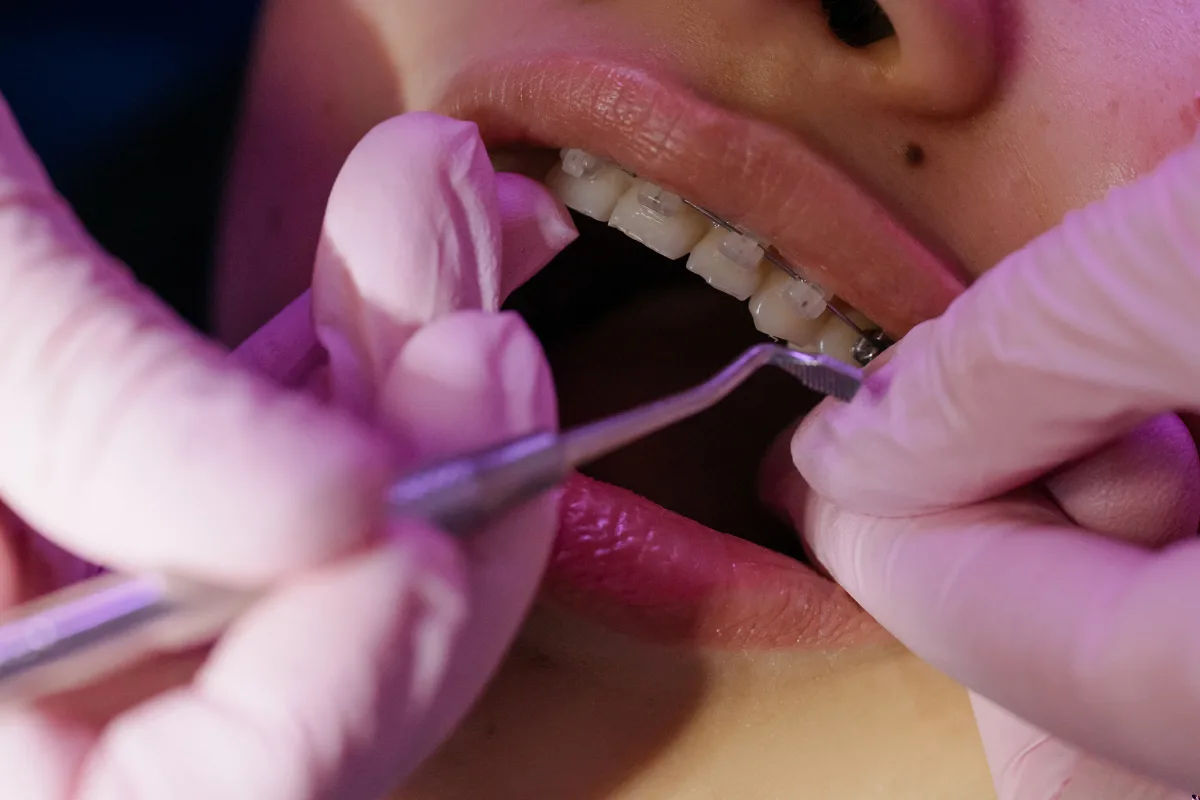
How long does a check-up actually take?
Most check-ups take only a few minutes. There's nothing dramatic about it — no drilling, no anesthesia, no long sitting with your mouth open. You come in, we look at how far we've gotten, I do my part, and you're free to go. That's why we schedule check-ups roughly once a month, every four to six weeks, because that's how long the teeth need to respond to the force your fixed braces create. More often would be unnecessary, less often would slow the treatment down.
What I do, step by step:
First I look at how the appliance sits and how much the teeth have moved since last time. I check that every bracket is in place and that nothing has come loose anywhere. Then I remove the old ligatures holding the wire, take the wire out, and that's where the most important part actually begins. I assess how much the teeth have progressed and decide whether we move on to the next, stronger wire or stay on the same one a little longer.
This is usually when we also chat about how the past few weeks went, whether there was any discomfort and how your oral hygiene is going. At the end I place a new wire and new ligatures — and you get to choose the color of the ligatures. That's the whole appointment.
Why do I change the wire almost every time?
The wire is what truly moves the teeth; the brackets are just guides. At the start of treatment I use thin, flexible wires that gently coax the teeth out of the worst positions. As we progress, I switch to thicker, firmer wires that work more precisely and with more force. That's why something feels different at every check-up — because it is. Each new wire is the next step in the plan we made at the very beginning.
What is your job before and during the check-up?
You help me most by coming with well-brushed teeth. It's easier for me to work and more pleasant for you. If a bracket has come loose in the meantime or something is poking you, be sure to tell me, because as a rule we solve that on the spot. If you're wearing elastics I gave you to change at home, tell me how it's going. And if you happened to bite into something you shouldn't have, you don't need to hide it — it's easier for me to help when I know the real picture.
What should you expect after the check-up?
Since I've just placed a new wire, it's completely normal to feel a mild tightness for the first day or two. That's not a sign that something is wrong — on the contrary, it's a sign that the appliance is doing its job. The feeling passes quickly, and during those few days you'll have an easier time if you choose softer food and avoid hard bites. It's very rarely necessary to take anything for pain, but if you really need to, that's no big deal.
When does a check-up take a little longer?
Sometimes a check-up isn't done in a couple of minutes after all. If I need to add a special element, a spring or a chain, or to re-bond a bracket that came loose, we set aside a bit more time. Near the end of treatment I sometimes also take impressions for retainers. These are all planned steps, and I'll always tell you in advance when I expect us to take a little longer, so you know where you stand.
Why are regular check-ups important?
The appliance only moves the teeth if I adjust it regularly. If you skip an appointment and it stretches out to two or three months, the wire has already done its job and is just sitting there, and sometimes the teeth even start moving in the wrong direction. As a rule that means a longer treatment, and nobody wants that. The good news is that with me you don't have to think about any extra cost, because all check-ups are included in the price until the braces come off.
And yes, one little thing to finish. I know you'll probably call it a fixed denture — almost everyone does. But the right name is fixed braces. A denture replaces a tooth that's missing, while braces move your own teeth into the right place. Now that you know that too, see you at your next check-up. And if you're only just thinking about straightening your teeth, book an appointment so we can meet.
Got a question about this topic?
Book a specialist consultation or a free online consultation, I reply the same day.