Specialist orthodontic treatment that permanently corrects the position of your teeth and your bite. We choose metal, combined or sapphire brackets together at your first exam, at Dental Med NS, Puškinova 9a.
Metal, combined or sapphire brackets. We choose the right type together at your first exam, to fit your needs.
02
12 to 24 months
On average 12 to 24 months, individual to each case. I give an exact estimate after diagnostics.
03
Straightening without extractions
With dedicated work and real expertise I almost always avoid removing healthy teeth. For me it is the last option.
04
All check-ups included
The price covers every check-up until the braces come off. No extra costs and no hidden add-ons.
Terminology
'Prosthesis' or fixed braces?
Orthodontics is often confused with prosthodontics, and so are the terms denture and brace. Here's the difference.
P
Prosthesis
A term used in prosthodontics. A prosthesis is for replacing missing teeth, placed where a tooth is absent.
A
Braces (fixed)
A term used in orthodontics. It is bonded and fixed to the teeth and is used for moving teeth and straightening the smile.
In everyday speech both terms mean the same thing, but in medicine they're two different things. At Dental Med NS I do orthodontic braces.
Why fixed braces
3 reasons it makes sense
01
Confidence
Smile freely, anywhere, no one deserves to hide their smile.
02
A correct bite
An incorrect bite disrupts digestion and loads teeth unevenly.
03
Clearer speech
Straightening teeth improves articulation, clearer and more natural.
Types of fixed braces
3 types of fixed braces, clear pricing
Fixed braces in Novi Sad range from €1,500 for metal to €2,400 for sapphire. All prices include every check-up until the braces are removed.
01
Classic and proven
Metal braces
from €1,500
≈ 180,000 RSD
The most common choice in orthodontics. Metal brackets on the outside of the teeth, connected by a wire. At every check-up you choose the elastic colour that suits you.
Ideal for
Children, adolescents and adults looking for the most affordable option
Most popular02
Discreet combination
Combined braces
€1,950
≈ 234,000 RSD
Sapphire brackets on the upper jaw (aesthetic, less visible) and metal on the lower. A balance between aesthetics and price.
Ideal for
Patients who want aesthetics on top and economy on the bottom
03
Maximum aesthetics
Sapphire braces
€2,400
≈ 288,000 RSD
Clear sapphire brackets, discreet straightening without conspicuous metal. Keeps a flawless appearance throughout treatment.
Ideal for
Professionals, adults, patients for whom visibility matters
Interest-free installments available, we arrange them together at your first exam.
Often unknown
What else can fixed bracesdo?
Fixed braces aren't only for straightening crooked teeth. With the right approach, they open up many more possibilities than most patients realise.
01
Jaw correction in children
While a child is growing, fixed braces can correct jaw position too, not just teeth. Often prevents the need for surgery later.
02
Facial profile changes
Beyond moving teeth, treatment often brings external changes too, facial symmetry, lip competence, a more harmonious profile.
03
Combination of braces
A popular combination: sapphire on top (the more visible part) + metal on the bottom (less visible when speaking). Aesthetics on top, economy on the bottom.
“In adults, jaw correction is possible with orthognathic surgery, a combination of fixed braces and an operation. At the consultation we can assess together whether that's your case.”Spec. dr stom. Sonja Gligović
Treatment path
3 phases to a straight smile
Placing the braces is completely painless.
01
Consultation and treatment plan
X-rays, dental model, detailed medical history and creation of the treatment plan. I identify the reasons for the irregularity and we define the next steps together.
02
Fitting the braces
Painless, takes about 90 minutes. The bonding material holds the brackets firmly until the end of treatment, with no problems at removal.
03
Active treatment and retention
Check-ups every 4 to 6 weeks. Results within a few months, with treatment lasting up to 24 months total. After braces removal, I recommend the most effective retainer for your case.
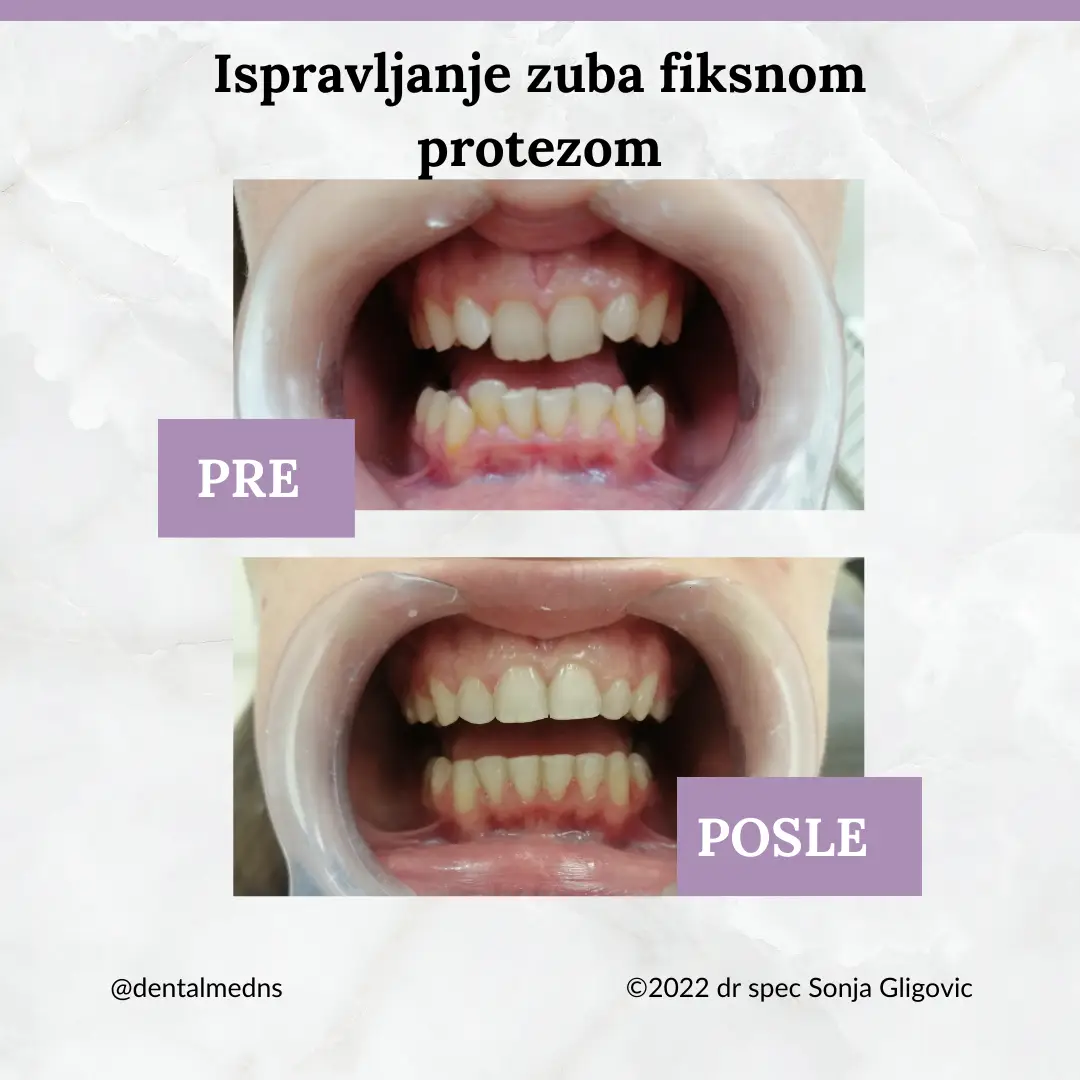
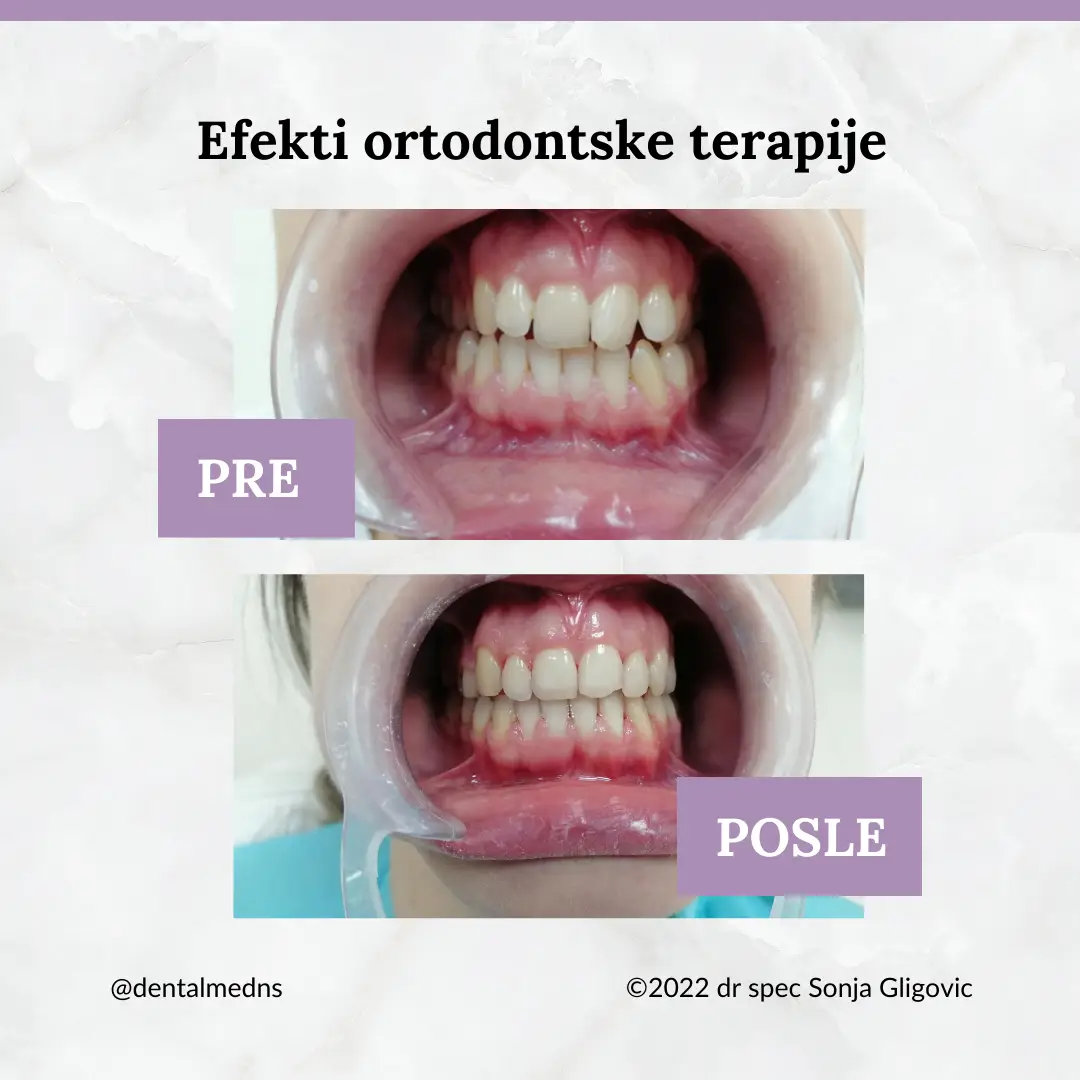
Fixed braces before and after
Results from Dental Med NS patients
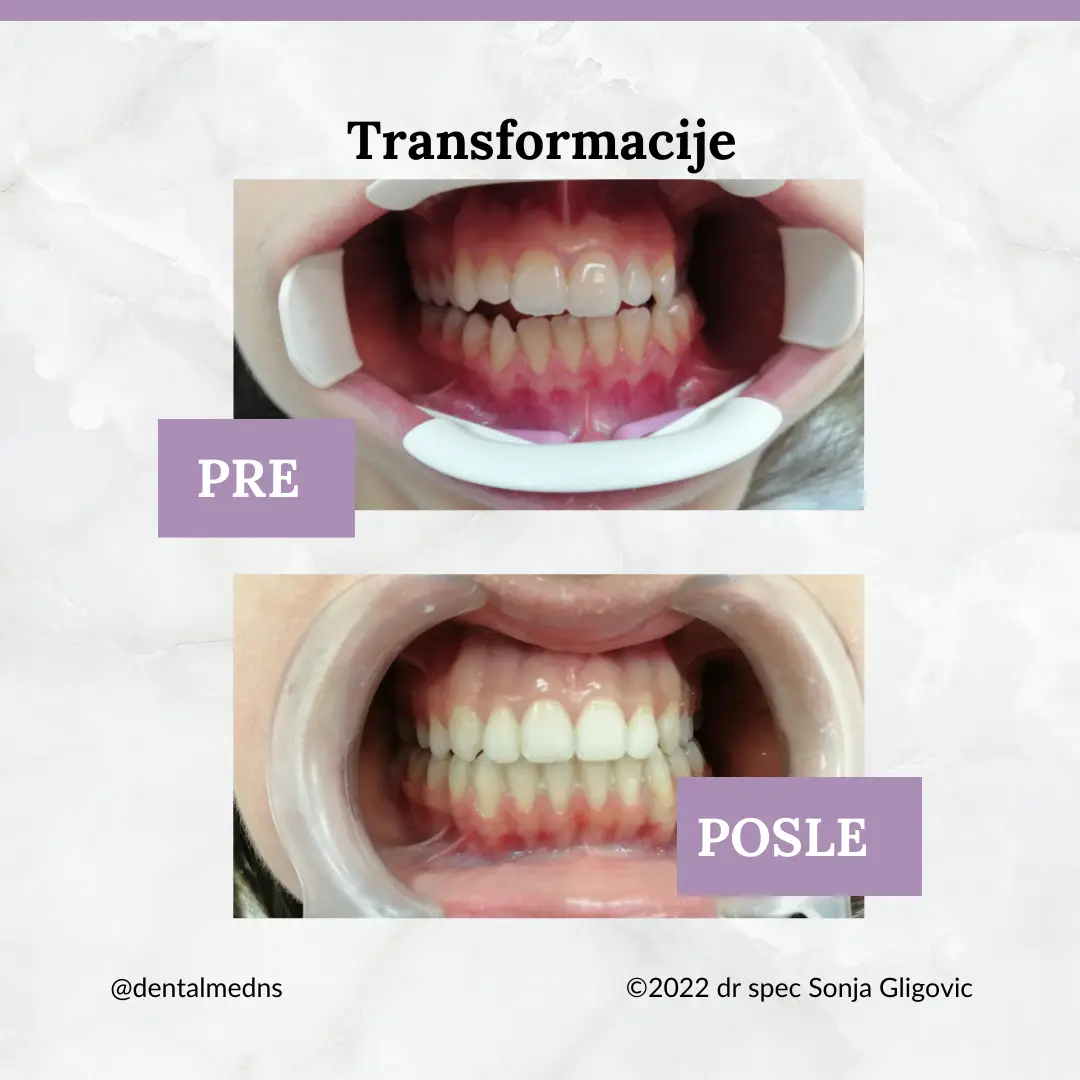
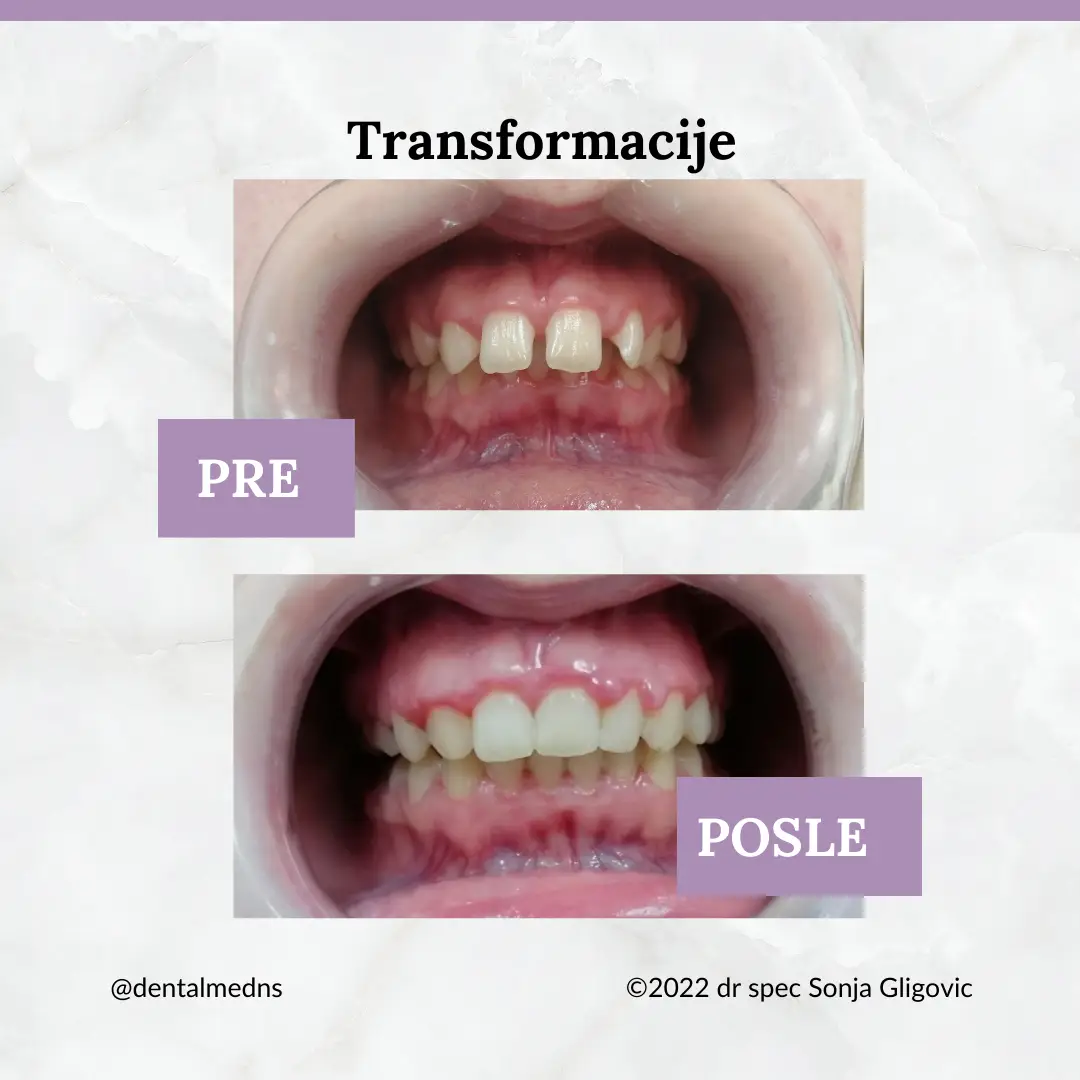
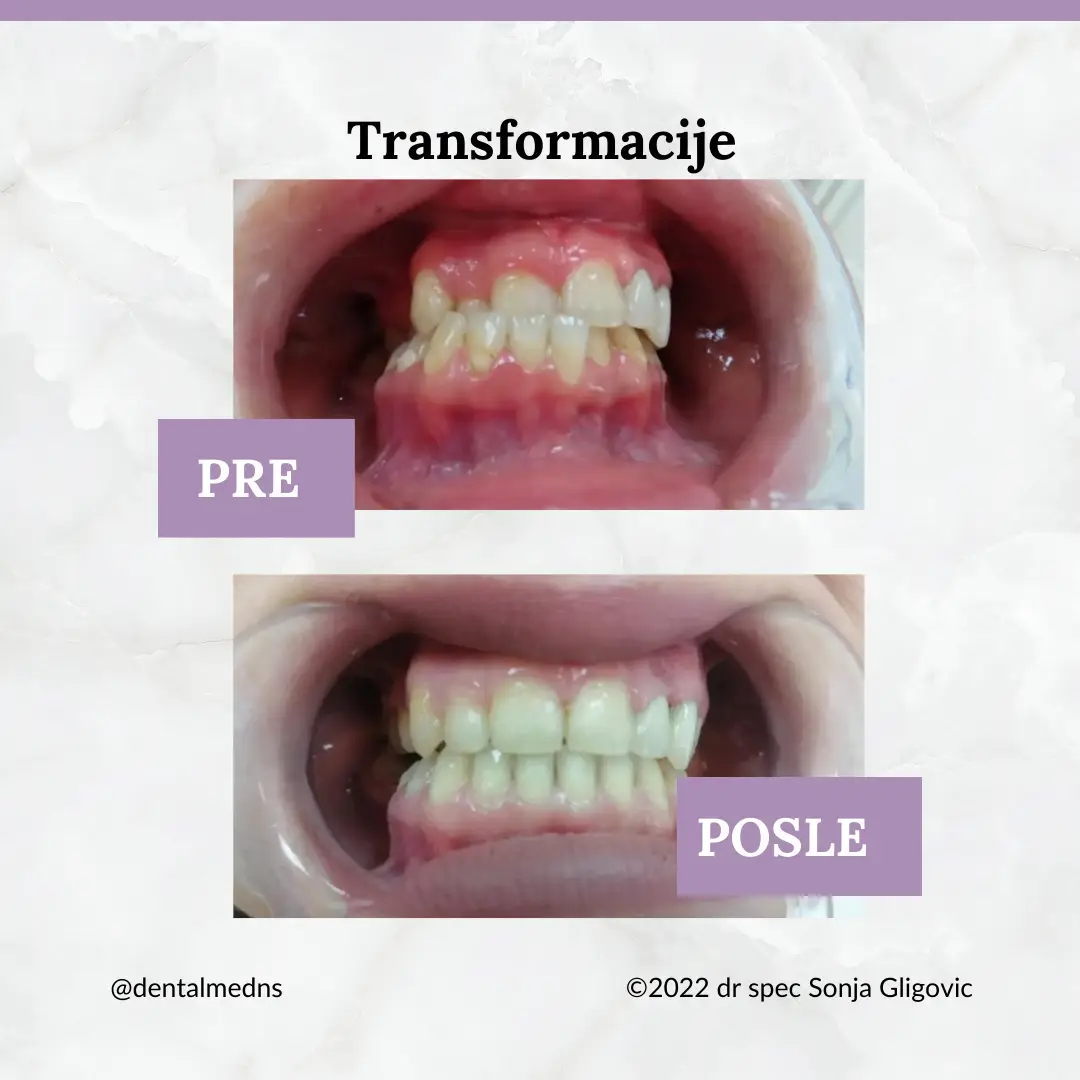
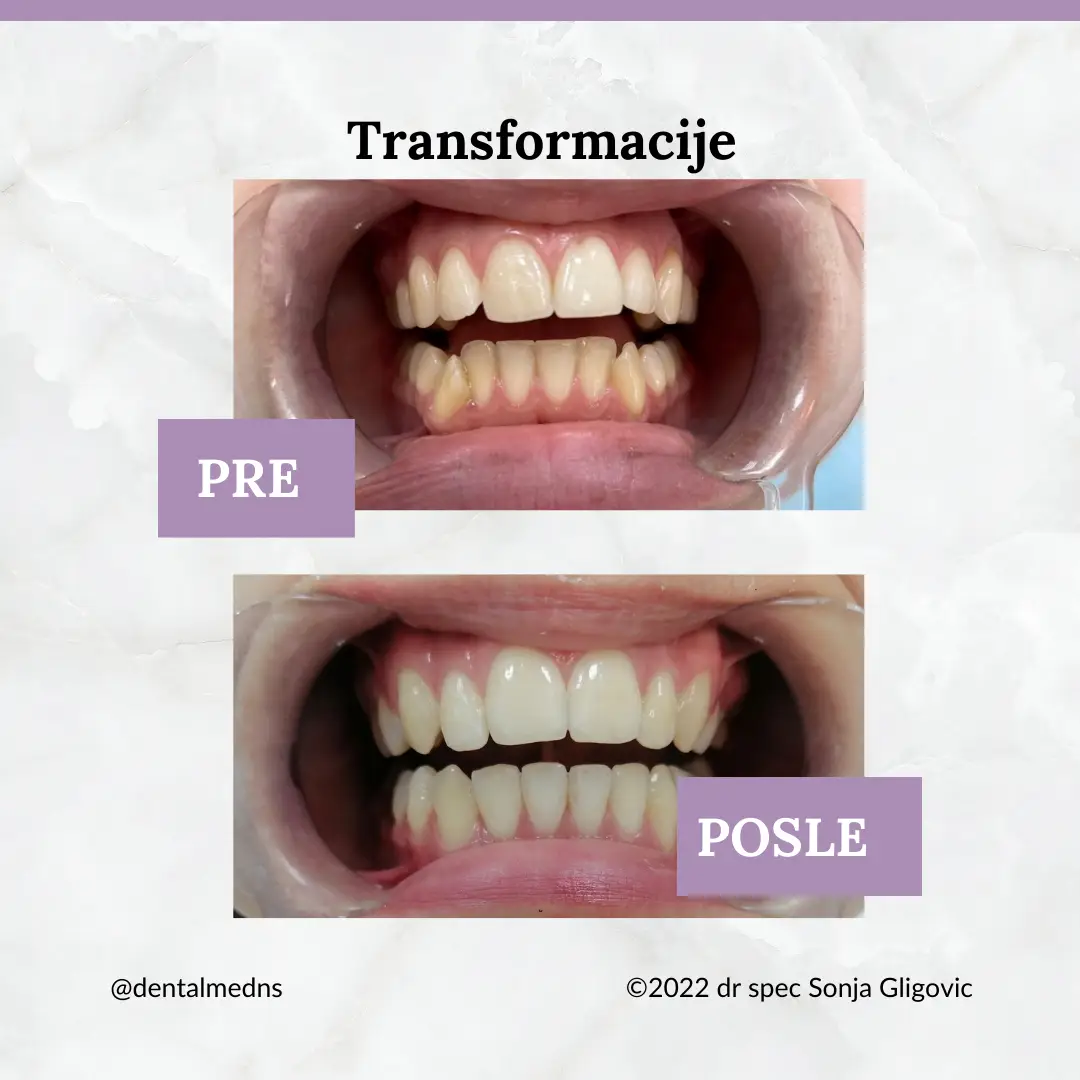
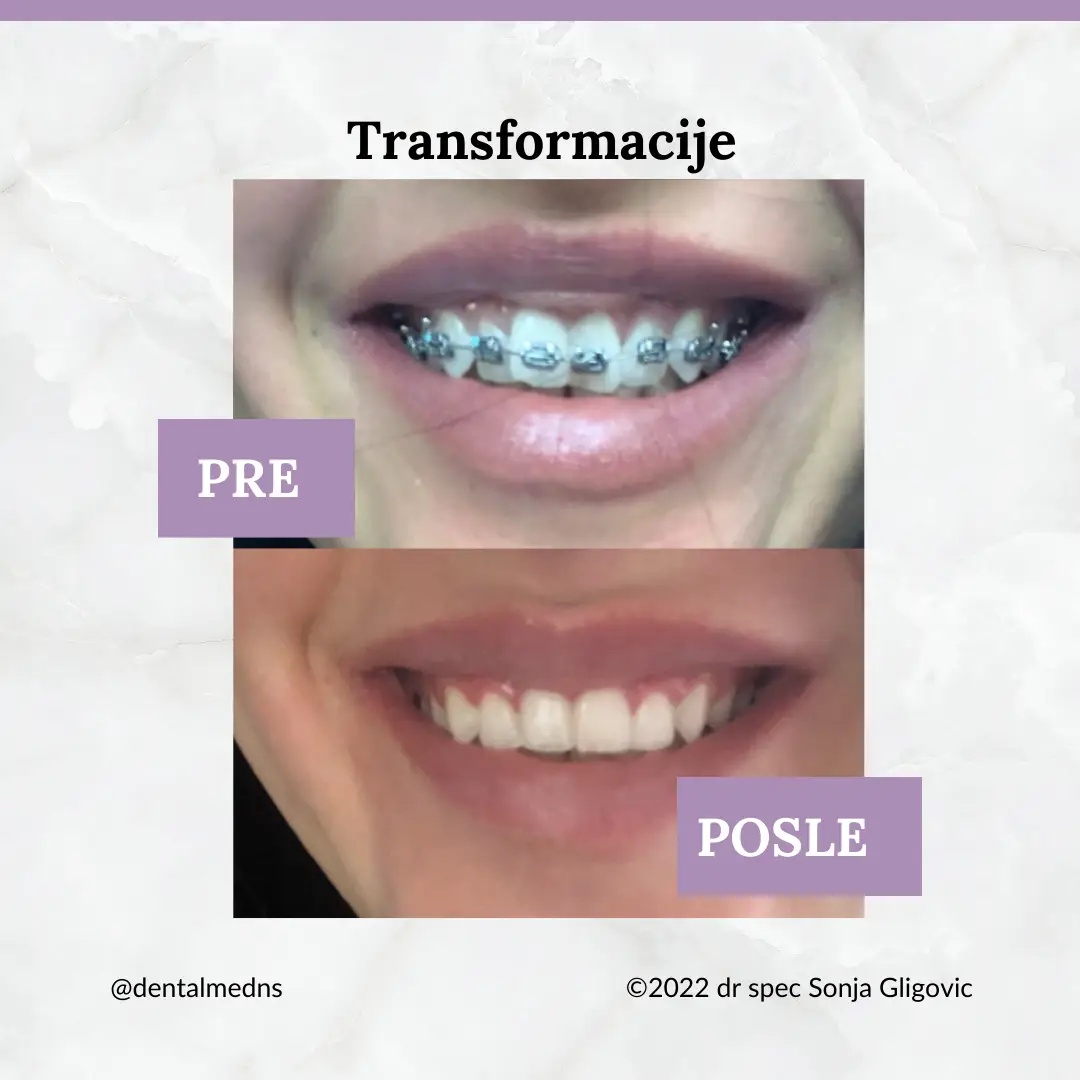
Real examples of teeth straightening with fixed braces, photographed at the practice with patient consent. Every transformation is the result of patient treatment lasting 12 to 24 months.
Patient01
Patient02
Patient03
Patient04
Patient05
Patient06
Patient07
All images are published with written patient consent. No identities are revealed, only the teeth before and after treatment are shown.
I can't review the dental services, but the customer service is terrible. I didn't even get a response. If you're not taking new clients, just say so.
Goran Ivankovic
3 years ago
I would highly recommend Dr. Sonja Gligovic and dental office "DentalMed".
Overall experience is exceptional, professional but friendly attitude by Dr. Sonja, absolutely painless treatments…
Tatiana Usova
3 years ago
It was the best dentist experience in my life! Doctor was very gentle with my teeth. I also received good consultation about my mouth's health so now I know what I should pay attention…
Sergei Smagin
3 years ago
I wear aligners and I needed a separation. It was done well. Overall, the clinic is good, doctors are friendly and speak English pretty good.
Ilya
3 years ago
English-speaking doctor, everything is at a high level, I liked it. Thank you
3500treatments completed
15years of experience
Fully focused on orthodontics
Mind your food
What to avoid during treatment
Teeth are moving, any inappropriate pressure can damage them permanently. You also receive written instructions.
🍬
Chewing gum
Sticks to brackets and damages the appliance.
✗
🍫
Sticky sweets
Toffees, gummies, they pull the wire.
✗
🌰
Hard nuts in pieces
Hazelnut, walnut, almond: never whole. Chop them up.
✗
🍿
Popcorn
Hard kernels break the brackets. Nobody needs popcorn for 24 months.
✗
✓
Everything else is allowed Orthodontic wax for the first 7 days if anything rubs (I provide it). Paracetamol only if really needed, rarely required. Detailed hygiene instructions are given at the clinic, with a written guide.
Patient experiences
What wearing fixed bracesis like
Daily life with fixed braces quickly becomes routine. After 3 to 7 days of adjusting, you stop noticing them. Here's what to expect in each phase of treatment.
01
First 7 days
Mild tension and tooth sensitivity is normal. Orthodontic wax calms cheek irritation. Softer food and warm compresses help you adjust.
02
First month
Speech and eating become completely normal. Tooth movement is already noticeable, especially on the front. You've learned the special brushing technique around the brackets.
03
Sixth to twelfth month
A visible change in your smile. Check-ups every 4 to 6 weeks, each lasting 15 to 20 minutes. Patients at this stage often forget they are wearing braces at all.
04
Removing the braces
After 18 to 24 months the braces are removed painlessly in around 30 minutes. The retention phase follows, a wire or clear retainer, to keep the result permanent.
After braces removal
Retention, for life, because
Teeth naturally tend to return to their original position and continue moving even at 60, regardless of whether braces were ever worn. Nothing in the body is static, everything requires maintenance.
Option 1
Retention wire
A thin, rounded wire fixed to the inside of the front teeth. It isn't removable. Invisible from the outside, only slightly felt with the tongue. Patients adjust very quickly.
Option 2
Retention aligner
Clear and thin, almost invisible. Removable. The first 3 months 24h, then only at night. Bonus: also protects against bruxism (teeth grinding in sleep).
“Over time the appearance of the face changes, muscles atrophy, wrinkles deepen. Everything needs maintenance. Why would we expect teeth to maintain themselves?”Spec. dr stom. Sonja Gligović
FAQs
Before you book
01
How much do fixed braces cost in Novi Sad?
At Dental Med NS, metal braces are €1,500 (180,000 RSD), combined €1,950 (234,000 RSD), sapphire €2,400 (288,000 RSD). All prices include check-ups until the braces are removed.
02
Can fixed braces move jaws too, not just teeth?
In children who are still growing, yes, fixed braces can correct jaw position too. In adults this is possible with orthognathic surgery (a combination of fixed braces and an operation). Beyond moving teeth, external changes to facial profile, symmetry and lip competence are also possible.
03
Is it possible to fit braces on only one jaw?
It isn't, or more precisely, it's wrong to treat only one jaw. The jaws are connected at the temporomandibular joint and we chew with both. Separating treatment causes bite problems. Very rare cases allow it, and that's something I assess at the consultation.
04
What's the best age?
The best results are achieved from age 10 to 14, while jawbone growth is finishing. Up to age 22 results are still very good. After that, treatment is still possible and successful.
05
How long does fixed braces treatment take?
Individual for each patient, with a maximum of 24 months (2 years). Any treatment beyond that, especially much beyond, is unforgivable, because it causes long-term consequences for the teeth and points to a lack of orthodontist commitment. I give a precise plan after diagnostics.
06
Do fixed braces hurt?
Placement doesn't hurt. It's normal to feel tooth movement and occasional pressure, but not unbearable pain. If someone has heightened sensitivity, paracetamol can be taken, rarely needed. Adjustment takes up to 7 days.
07
Is a diagnostic mandatory before treatment?
Yes, it's essential. Proper orthodontic diagnosis requires X-rays, a dental model (impression) and detailed medical history. I often recognise genetic patterns when the same irregularity repeats in a family. Only with an accurate diagnosis can I make a plan that leads to the desired result.
08
Is there an invisible fixed brace?
Clear sapphire brackets are far less visible than metal ones and stay clear throughout 2 years of treatment when real sapphire is used. For a completely invisible option, consider clear aligners or lingual braces placed on the inside of the teeth.
09
What shouldn't be eaten during treatment?
Forbidden: chewing gum, sticky sweets, hard nuts in pieces, popcorn, and overly hard food that can physically damage the appliance or a tooth. Teeth are moving during treatment and any inappropriate pressure can damage them permanently. Every patient receives written instructions with all the details.
10
How long is retention worn?
For life. Teeth naturally tend to return to their original position and continue moving even at 60, regardless of whether braces were worn or not. Nothing in the body is static, wrinkles deepen, muscles atrophy, everything needs maintenance. Why would we expect teeth to be any different?
11
What's the procedure for fitting fixed braces?
Fitting fixed orthodontic braces is a painless procedure carried out in a single visit. It takes 60–90 minutes, depending on whether only the upper or both jaws are fitted. Brackets are precisely bonded to each tooth with special materials, then the orthodontic wire and elastics, whose colour you choose every time, are placed. At the end you receive detailed instructions on hygiene and diet during treatment.
12
What if a bracket breaks off?
If a bracket comes off in the first 24h after fitting, it's possible saliva contacted the adhesive, in which case I resolve it at my cost. Anything after 24h is damage caused by not following the rules: one bracket is included in the treatment price; every additional re-bonding costs €20 per tooth. In any case, please tell me as soon as it happens so I can plan enough time at the next check-up.
13
Are the upper and lower braces fitted at the same time?
It depends on the case, everyone has a different treatment plan. Some have the upper braces fitted first, and the lower some time later; others have both at once.
14
Which elastic colours do you have?
I have a full palette of elastics, from the most colourful to neutral (grey for metal brackets, clear elastics for sapphire). They're changed at every visit, so you can choose a different combination each time.
15
How do I book check-ups for fixed braces?
Check-ups are booked in advance, at each one you receive an appointment for the next (4–6 weeks). If needed, the appointment can be changed through the online booking option on the site.
16
How can I reach you if I have questions?
The quickest way is to book an exam online or write to me through the form on the site. I'm glad to answer everything before you commit to anything.
Next step
Book your first consultation and get a treatment plan
The specialist orthodontic consultation takes around 45 minutes. The price is €30 (3,500 RSD) and includes impressions, analysis and a clear plan with pricing.