What Foods to Avoid With Braces
When patients come in to get their fixed braces fitted, one of the first things they ask is: 'Doctor, what can I eat now?' That concern makes complete sense. Braces are a real investment, in both money and time, and the last thing anyone wants is a caramel or a handful of nuts setting their treatment back. So I decided to put everything I normally tell my patients in the chair right here, in one place, where you can come back to it whenever you need to.
Why diet matters so much when you have braces
Braces are made up of brackets bonded to your teeth, an archwire running through them, and small elastic ties that hold the wire in place. Every one of those parts plays a role in moving your teeth, and every one of them can be damaged by the wrong food.
There are two kinds of risk here, and both matter. The first is mechanical. Hard, crunchy, or tough foods can knock a bracket off, bend the wire, or snap a ligature. Each time that happens, it means an unplanned visit, extra cost, and a real slowdown in treatment.
The second risk is about hygiene and the health of your teeth. Braces create a lot of hidden spots around the brackets and under the wire where food gets trapped and stays longer than it normally would. If you eat a lot of sugary or acidic food on top of that, bacteria have ideal conditions to work, and cavities can form faster than you would expect. Gum inflammation is also common with braces when hygiene slips. Any inflammation makes orthodontic treatment harder and slower.
Good dental health is the foundation for everything. Your teeth need to be fully treated before braces go on, and kept in that condition until the very end. What I sometimes see is patients gradually relaxing and assuming the rules matter less once treatment is underway. That is not how it works. Consistent care, both with food choices and with brushing, is what gets good results.
The good news is that eating well with braces is very manageable. Most patients adjust within a few weeks and stop thinking about it entirely, the same way brushing after meals becomes automatic.
Foods that can physically damage your braces
This is the category that causes the most unexpected appointments. These are the foods that directly affect the brackets, wire, and elastics.
Hard foods
Hard foods are the main reason brackets come off. When you bite into something hard, the force travels to the tooth and can break the bond between the bracket and the enamel.
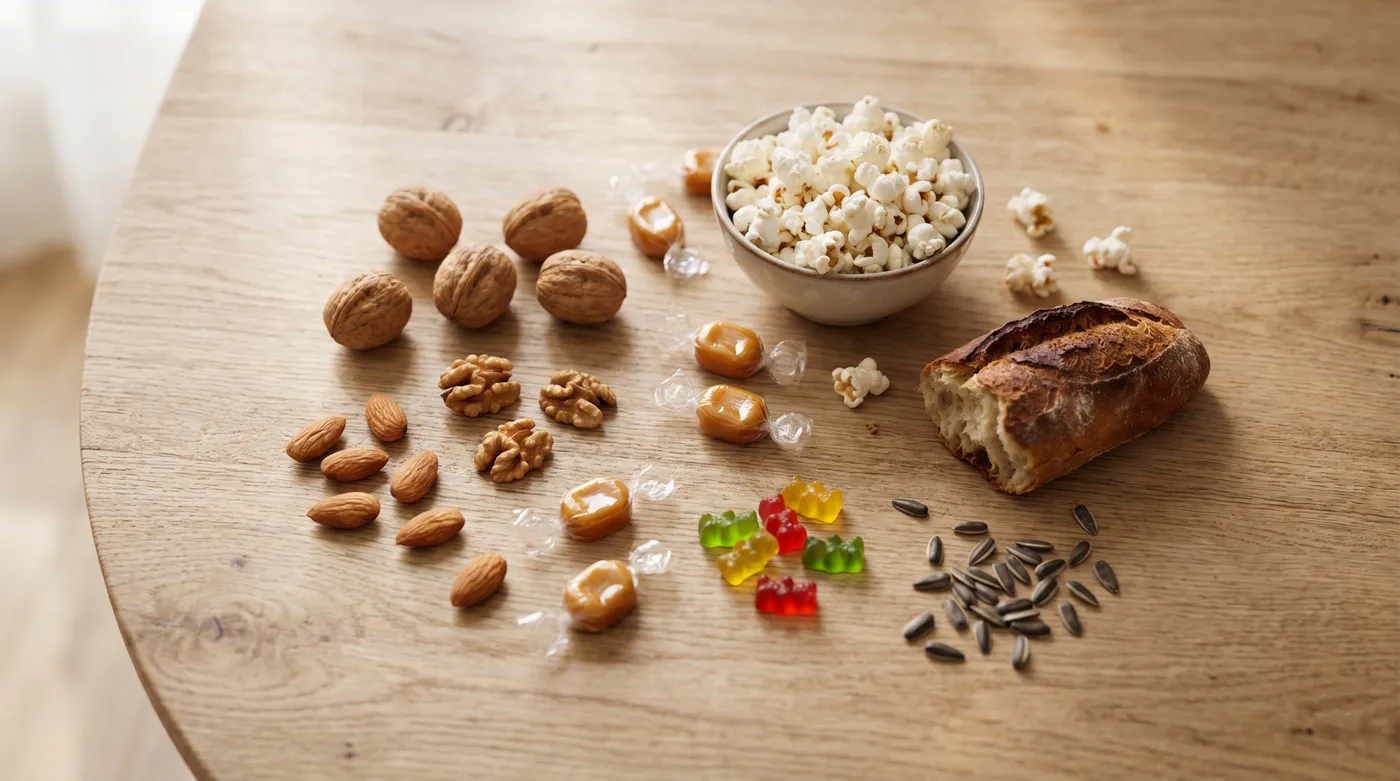
Walnuts, hazelnuts, almonds, peanuts, popcorn, seeds, and pits all belong here. So do things people often overlook, like rusks, crispbreads, and hard bread crusts such as baguette. Chewing ice is a particularly bad habit to drop before you get braces, because the pressure goes straight to the brackets.
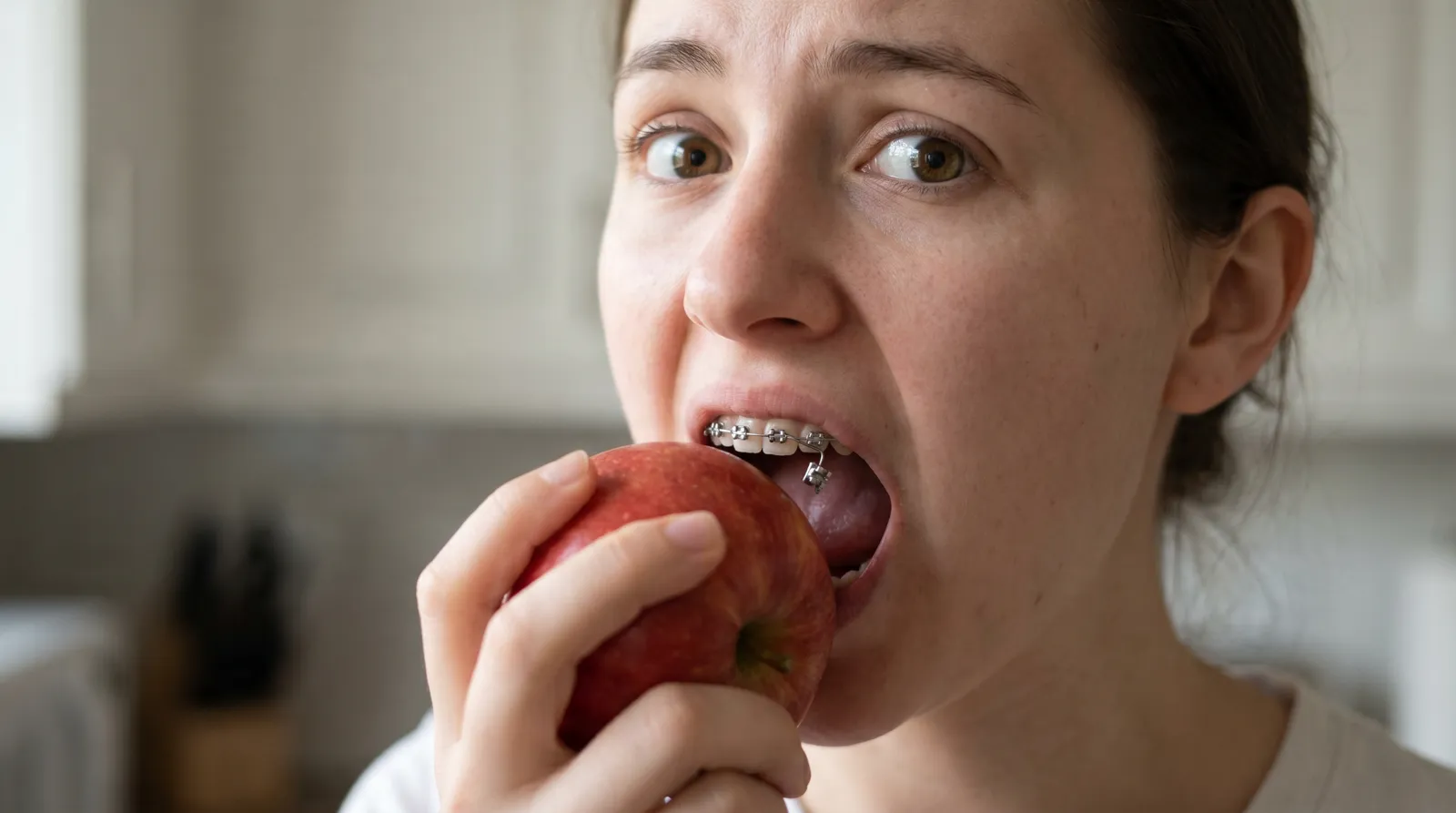
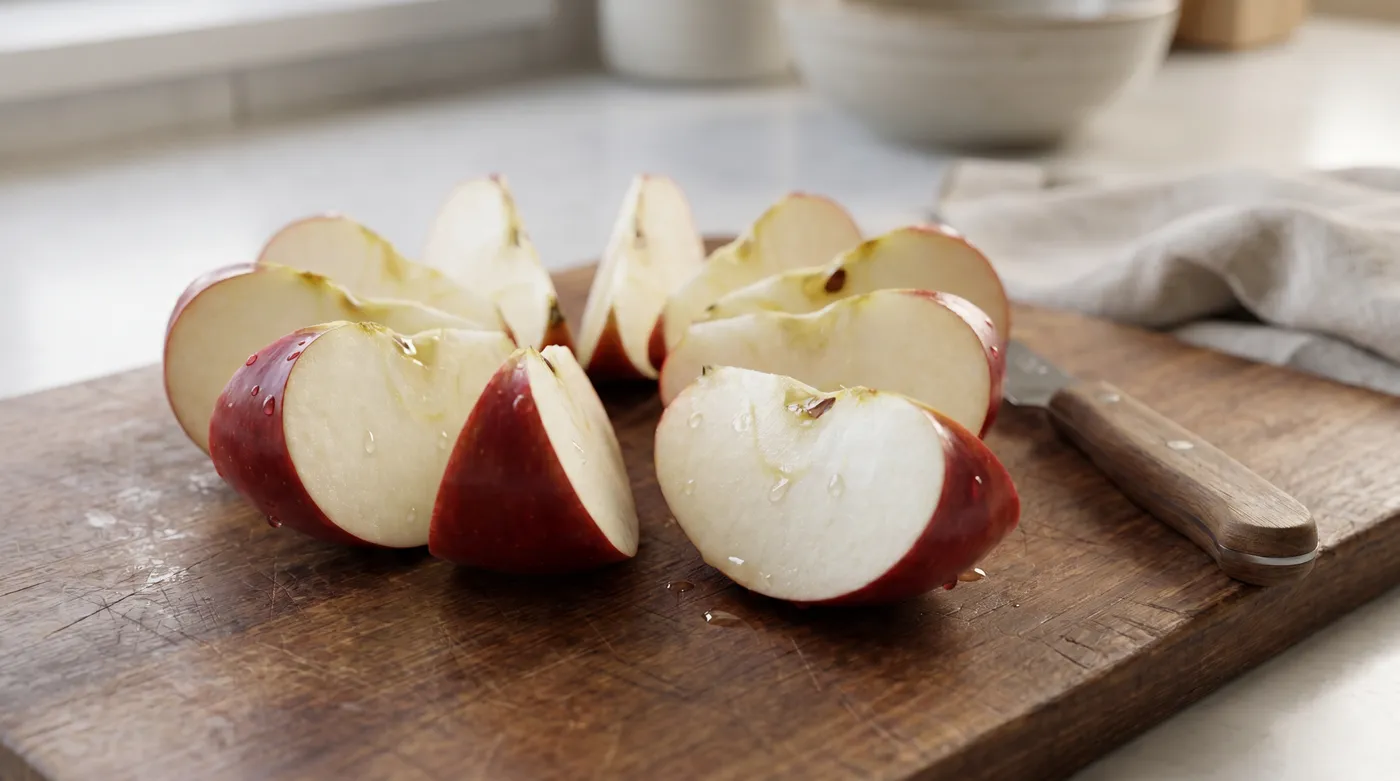
Apples and carrots are fine, by the way. You just need to cut them into small slices and chew with your back teeth rather than biting straight in. That one change makes a big difference.
The general rule is to avoid biting with your front teeth. Most harder foods can still be eaten if you cut them into pieces first and use a fork and knife.
Sticky foods
Sticky foods are a different kind of problem. They do not snap anything right away, but they grip onto brackets and wire, are very hard to clean off, and can pull a bracket loose when you least expect it. Caramels, gummy sweets, toffees, nougat, and any jelly-type confectionery all belong here.
Chewing gum is off the table for the entire duration of treatment, no exceptions, even sugar-free types. Sugar aside, gum sticks to everything on the appliance. Sugar-free does not make it safe.
Crunchy snacks
Crunchy snacks might seem fine, but the shards and crumbs from biting into them end up exactly where you do not want them, around brackets, under the wire, and behind the elastics. Crisps of any kind, puffed corn, breadsticks, crackers, and tortilla chips are all in this group. Beyond the hygiene problem, hard shards can mechanically damage the appliance in much the same way as nuts.
Foods and drinks that damage your teeth while wearing braces
This is the category patients rarely think about, but it is important. The braces themselves will not harm your teeth. But certain foods and drinks make your teeth much more vulnerable while the appliance is on.
Sugar and sweets
Sugar is bad for teeth without braces. With braces, the problem is worse because sugar can sit around the brackets and under the wire long after brushing. Bacteria turn that sugar into acid, which attacks the enamel, and cavities can form right under or around a bracket where you cannot even see them while treatment is ongoing.
That does not mean cakes and chocolate are off limits forever. It means you need to brush straight after eating them, not wait until evening. Fizzy sugary drinks and energy drinks are especially damaging because they combine sugar and acid at the same time.
Acidic foods and drinks
Acid attacks enamel directly. Fizzy drinks, even sugar-free ones, contain carbonic acid that damages the enamel the brackets are bonded to. Energy drinks are worse, and there is nothing in them that benefits your teeth. Large quantities of lemon juice, sour drinks, and even daily orange juice in excess can cause enamel erosion that only becomes visible once the braces come off.
You do not need to cut out everything acidic. A few simple habits help a lot. Drink fizzy drinks through a straw to limit contact with your teeth. Rinse with plain water after anything acidic. And wait about 30 minutes before brushing after acid, because brushing while the enamel is softened actually makes the erosion worse.
Drinks that stain the elastic ties
This is more of an appearance issue than a health one, but I mention it because patients are genuinely surprised when they come in for a check-up and see how much their clear elastics have discoloured. Coffee, black tea, turmeric, red wine, and juices from berries and sour cherries are all very good at staining clear or white ligatures brown or yellow. If that bothers you, we can switch to darker elastics at your next appointment, or just reduce how often you have those drinks. There is also the option of clear aligners for patients who really do not like how fixed braces look, but that is a separate conversation.

What to eat after getting braces fitted or adjusted
This is something nobody talks about enough, but every single one of my patients goes through it. After getting braces fitted, and again after every adjustment visit, your teeth will be more sensitive for two to four days because they are under stronger pressure. Chewing can be uncomfortable during that time, which is actually a good sign. It means the braces are working.
Stick to foods that do not need much chewing in those days. Soups are great, just not too hot, since heat makes sensitivity worse. Yogurt, kefir, mashed potatoes, cooked vegetables, porridge, bananas and other soft fruits, soft cheeses, eggs any way you like them, fish, and minced meat are all good options. Once the sensitivity settles, usually within a few days, you go back to eating normally within the usual limits.
What you can eat without any worry
The list of things to avoid can seem long at first, but the list of what is completely safe to eat is much longer. Pasta, rice, and cooked grains are fine. Chicken, turkey, fish, and minced meat are fine. Eggs, dairy products, cooked and steamed vegetables, soft fruit or fruit cut into pieces, bread with a soft crust, soups, stews, and ice cream without hard pieces or cones - all safe.
After a few weeks, you will not need to think about this anymore. You will just know instinctively what works and what does not.

Practical tips
Cut food up, do not bite into it
This might be the single most useful piece of advice I can give. A lot of foods that sound off-limits are actually fine if you prepare them properly. Cut an apple into pieces and eat them with a fork instead of biting in whole. Tear or slice your bread instead of biting into a whole sandwich. Cook carrots or grate them instead of chewing on raw sticks.
The reason is simple. Biting puts maximum force on the front teeth, right where the brackets are. Chewing already-cut food with the back teeth is much safer for the appliance and better for the treatment.
Brush after every meal
Twice a day is not enough with braces. After every meal, food gets stuck around the brackets and needs to come off before bacteria start working on it. The easiest habit is to carry a small toothbrush and travel-size toothpaste with you and use them after eating. If that is not possible, rinse well with water and brush as soon as you can.
Use an interdental brush for the hard-to-reach spots under the wire and between the brackets. A regular toothbrush cannot get in there, and those spots are where problems start.
What to do if a bracket comes off
Do not panic. A bracket coming off is not an emergency. Keep it if it falls out and get in touch so we can book you in. In the meantime, use the orthodontic wax you got at the start to cover anything that is rubbing or poking. If the wire is bending or digging in, let us know as soon as possible. The wax handles it in the meantime and there is no need to worry.
Common questions
Can I eat chocolate with braces?
Yes. Plain milk or dark chocolate without hard pieces is fine, as long as you brush afterwards. Chocolate with nuts, toffee, or caramel filling is the problem, because it combines all three things to avoid in one go.
Can I drink coffee?
You can. Just know that if you have clear elastic ties, coffee will stain them before your next appointment. Darker elastics are an easy fix if that bothers you, or you can rinse your mouth after drinking. Either way, have a glass of water alongside your coffee and you will be fine.
How long do these restrictions last?
For as long as you are wearing the braces. That is usually between one and two and a half years, depending on what needs to be corrected. I always give a more precise estimate at the first consultation because it really does vary from case to case. It sounds like a long time when you first hear it, but within a few weeks most patients stop thinking about it completely.
How long treatment takes is also affected by attending appointments regularly, avoiding broken brackets, and following all the instructions, like wearing elastic bands if those are part of your treatment plan.
What if I accidentally ate something I should not have?
Check the appliance first. Look in the mirror and make sure all the brackets are where they should be and the wire is sitting correctly. If everything looks fine, no need to stress, just get back on track. If something has come off or shifted, send us an email and we will sort out a time to fix it.

One last thought
Eating with braces takes a bit of attention at the start, but it becomes routine quickly. Over the years I have seen a very clear pattern: patients who follow these guidelines have smoother treatments, fewer unplanned visits, and much better-looking teeth at the end. If you have a question that is not covered here, reach out through the booking form on the site or come in for a consultation at Dental Med NS and we can talk through it.
Got a question about this topic?
Book a specialist consultation or a free online consultation, I reply the same day.