What to Do When Braces Are Rubbing and Irritating Your Cheek
If you got your braces fitted recently and your cheek feels like you have been biting the same spot all day, you are not alone. This is something almost every patient goes through. Before I tell you what to do, one small note I always like to slip in: what you are wearing is called a fixed brace, not a dental plate or a prosthesis, even though I hear that mix-up from patients all the time.
And that is fine, everyone says it, but since we are learning what to do, let us also learn the right term. Below I explain why it hurts, how orthodontic wax actually works, how to tell everyday irritation from a real ulcer, and when to call me rather than waiting for your next appointment.
Why it hurts most in the first seven to ten days, and briefly after each visit
The inside of your cheek is delicate and not used to having something hard pressing against it. Brackets and wire ends are foreign objects, and the tissue needs a few days to toughen up and adjust. For most patients the worst discomfort hits around day three to five, then starts to ease. By day seven to ten most people have stopped thinking about it.
What often surprises patients is that something similar comes back briefly after each adjustment visit, when I change or tighten the wire. That is normal. The wire is a different thickness or tension, so the cheek has to adjust again — but this second round of adjustment usually takes a day or two, not a full week.
Orthodontic wax, your first ally (and how to apply it so it actually stays)
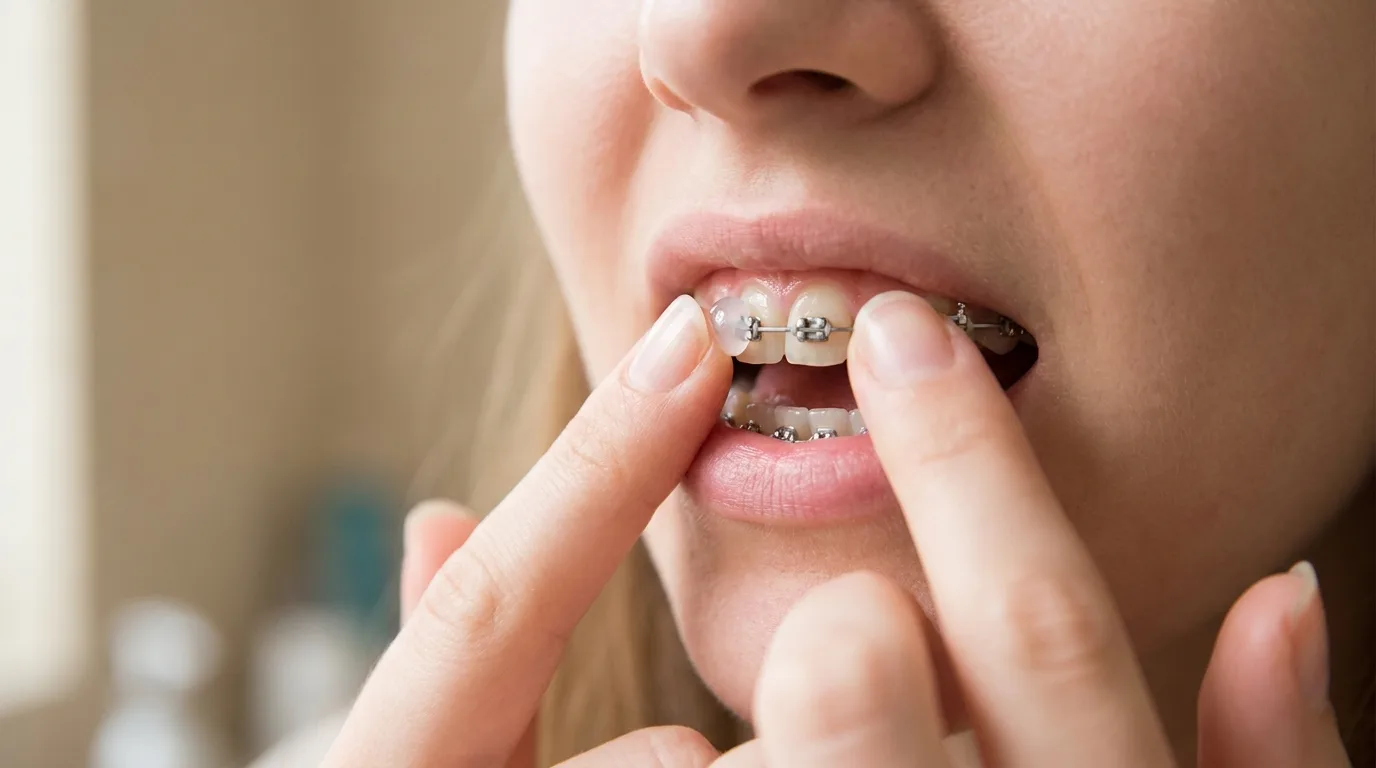
The wax I give you when your braces are fitted is not a medicine or a magic product — it simply creates a soft barrier between the metal that is poking you and your cheek. The friction stops, the tissue gets a rest, and within a few hours or overnight the spot under the wax heals on its own.
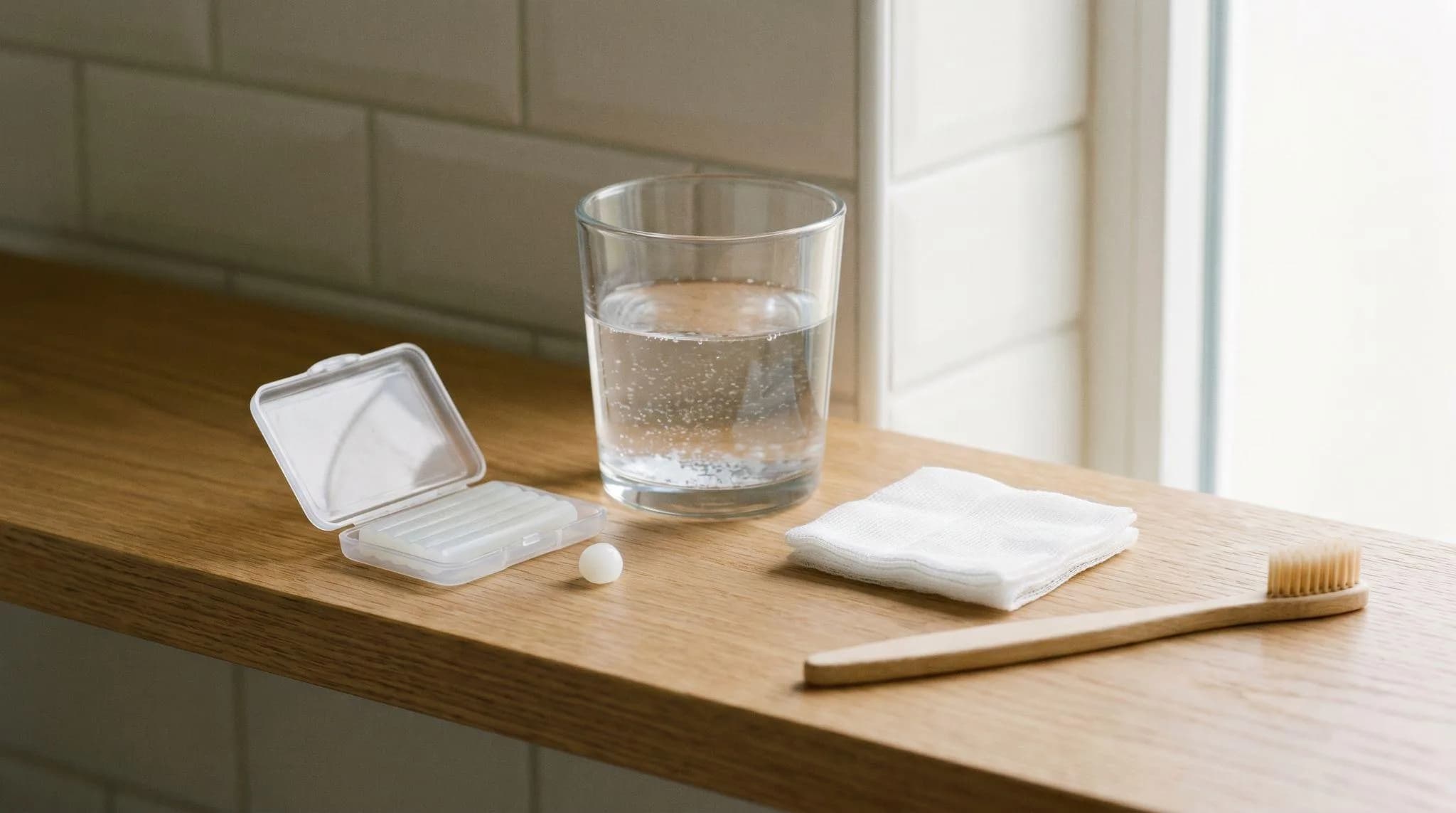
For it to stay where you put it, take a minute to do it properly. First, dry the bracket or wire with a small piece of gauze or a paper tissue, because wax does not stick to wet surfaces. Then pinch off a piece roughly the size of a pea and roll it between your thumb and index finger for a few seconds so body heat warms and softens it.
Shape it into a ball, press it over the bracket or wire end that is bothering you, and gently smooth the edges so it bonds. If you try to apply it cold or onto a wet bracket, it will fall off within minutes and you will think the wax does not work — when the real issue is just technique.
Remove the wax before eating and before brushing your teeth, then put a fresh piece on afterwards. During the day you will replace it two to four times, depending on how long it holds. One concern I hear often in the practice: if you accidentally swallow a small piece while eating, do not worry. The wax is medically inert and passes through your system without any problem.
What if you have no wax with you right now?
It happens — you are at work or travelling, and the box is at home. In the meantime you can tuck a piece of sterile gauze between the bracket and your cheek until you can get more wax, and rinse with warm salt water (one teaspoon of salt in a glass of warm water) a few times. Salt water reduces inflammation and speeds healing. What you should never put directly on the sore spot is rubbing alcohol, iodine, concentrated hydrogen peroxide, or soap, because you will cause further damage to the tissue and leave it open to bacteria.
How to tell everyday irritation from a real ulcer, because they are not treated the same way
This is the part most patients skip, then spend too much effort treating a simple irritation as if it were a serious wound — or the other way round, missing a real ulcer until it has been there a while. The difference is straightforward once it is explained properly.
Everyday irritation looks like redness or a slightly raised spot that stings when you eat or talk, but if you cover it with wax and leave it alone for one evening, by morning it is usually much better. That is just friction from metal on soft tissue.
A real ulcer, or aphtha, looks different. You will see a white or greyish dot, sometimes the size of a pin head, with a thin red ring around it. It stays for five to ten days even after you cover the cause with wax, because the tissue is already damaged and now needs to heal. For an ulcer, wax alone is not enough.
Keep using wax so you are not irritating it further, and rinse with warm salt water three to four times a day, especially after meals. At any pharmacy here you can find gels for mouth ulcers containing hyaluronic acid, chamomile or calendula, which form a protective film and reduce pain.
Apply a thin layer after rinsing, using a fingertip or a cotton bud, and leave it to work. If the pain is significant, ibuprofen taken with food — never on an empty stomach — handles both pain and inflammation. While the ulcer heals, avoid spicy, acidic and rough foods, because every bite will irritate it again. Warm, soft and mildly flavoured is your friend that week.
Red flags — when to call us rather than wait for your next visit
Most things you will sort out at home. There are a few situations where you should not delay calling the practice. The first is when a wire has slipped out of the back bracket and is sticking out so far that wax immediately falls off. The second is if you notice that a bracket has come off.
The third is if an ulcer lasts more than ten to fourteen days or keeps coming back in the same spot, because that means something is still mechanically irritating that point and we need to look at the brace. And the fourth, and most important: if you notice swelling that is spreading, a raised temperature, pus, or bleeding that will not stop, get in touch straight away — not tomorrow.
What not to attempt on your own, no matter how much it bothers you
I understand the temptation, especially when a wire is poking you in the middle of the night and you think you could just trim it a little with scissors. Do not. Do not cut the wire yourself, do not try to bend it with tweezers or nail clippers, because you risk swallowing a broken piece or disrupting the entire treatment plan. Do not try to peel off or reattach a bracket if it has come loose. And do not stop brushing your teeth in that area because the ulcer is sore. The opposite is true — keep brushing carefully with a soft brush, because an infected ulcer is far worse and more painful than gently cleaned sensitive tissue.
What I see from the practice
Almost every patient who gets fixed braces with me goes through this phase, and two weeks later most have completely forgotten it ever bothered them. The cheek adapts surprisingly quickly. What I always remind my patients is not to suffer in silence thinking it has to be this way. If something bothers you for more than a few days, if you are not sure whether what you see is simple irritation or a real ulcer, or if something just seems off, book an appointment or give us a call. Five minutes on the phone or a short check-up often resolves something that has been bothering you for a week.
Got a question about this topic?
Book a specialist consultation or a free online consultation, I reply the same day.