What to Do If a Bracket Comes Off Your Braces
You are having lunch, you bite down a little harder than you should have, and you feel that telltale „click” in your mouth. Or you run your tongue across your teeth and realise something is moving where it was solid a moment ago. A bracket has come loose.
First, let me reassure you: this happens. It is not rare, it is not a disaster, and it does not mean you did anything terribly wrong — well, maybe you did, but we will sort it out. The adhesive that holds the bracket to the enamel is deliberately made to be strong enough to hold the bracket throughout treatment, yet weak enough that the bracket can be removed safely when the time comes. Sometimes the force of a bite or an unexpected mouthful is stronger than that adhesive, and the bracket gives way.
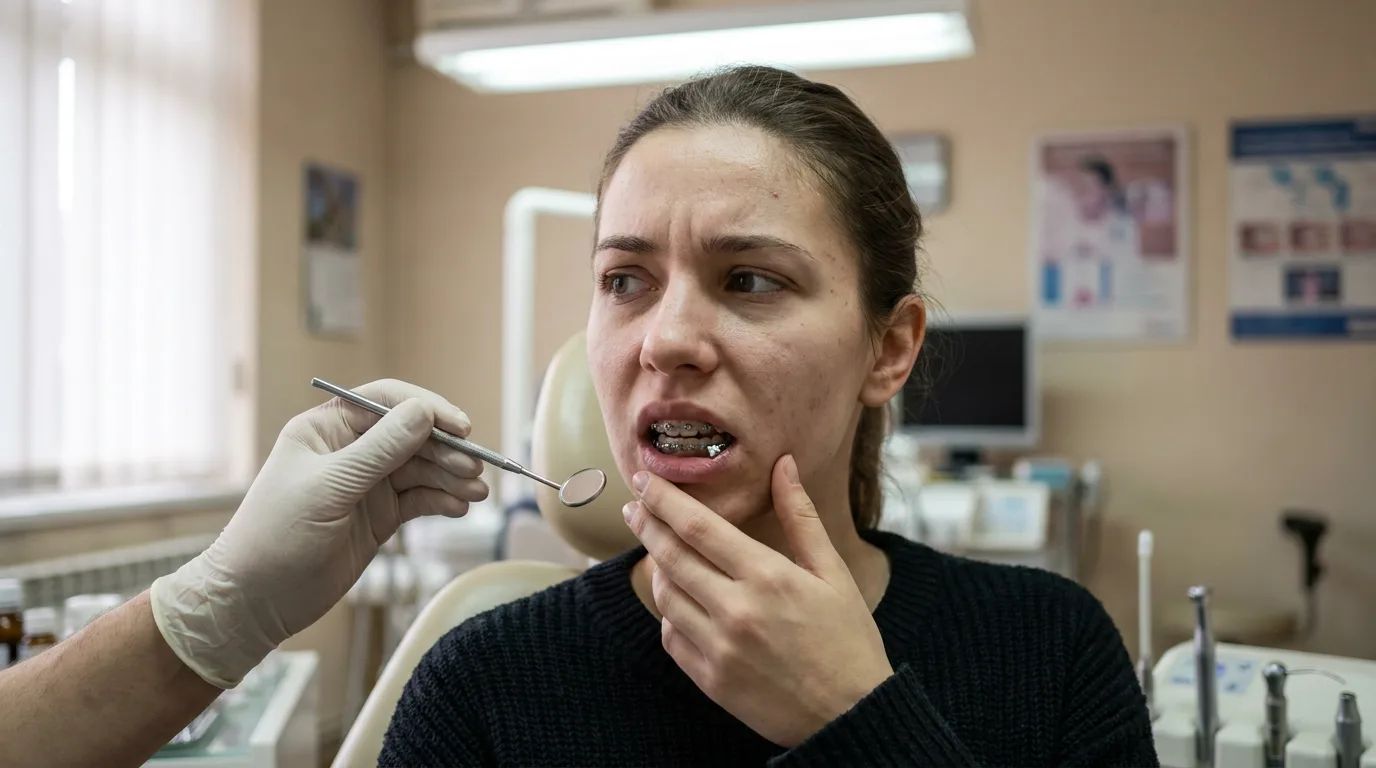
How to tell exactly what happened
Not all situations are the same, and how urgent it is and what you should do depends on what actually happened.
The bracket came loose but is still on the wire
This is the most common scenario. The bracket has separated from the tooth, but the wire still runs through it, so it slides up and down along the wire. You feel it with your tongue, it moves, it may bother you a little, but nothing hurts and nothing is poking you. This is not urgent. You can nudge the bracket with your fingers or tongue into the position where it bothers you least and wait until your check-up, or book an online appointment within the next few days.
The bracket fell off completely
It can happen that the bracket simply falls out of your mouth, say while you are eating. Just do not try to put it back yourself or glue it to the tooth with any household adhesive. That does not work and only creates a serious problem when you come into the practice.
The wire has slipped out or is poking your cheek
This is the situation that calls for the fastest response — not because it is dangerous, but because it hurts and can create a sore spot on the inside of your cheek or on your gums. The wire sometimes slips out of the last tube (that is the element on the back molar) and the end of the wire literally jabs your cheek. If this happens to you, read the next section, because that is where I explain exactly what to do.
The tube on the molar came off
Tubes are the rings or elements placed on the back molars that hold the end of the wire. When a tube comes off, you usually feel it right away because the wire loses its support and starts to move. This is similar to a loose bracket, except that the tube is more important, so the next step is for us to fix it at your next check-up — just mention it, that is, fill in the form explaining what happened, when you book online.
What to do until you get to the orthodontist
Orthodontic wax is your best friend
When I fit your braces, you get a little box of orthodontic wax. If a bracket or wire is rubbing you, take a small piece of wax, roughly the size of a pea, knead it with your fingers until it softens, and stick it over the part that is irritating you. The wax creates a barrier between the metal and your cheek or gums and immediately reduces the discomfort. It is completely harmless, so if you accidentally swallow some while eating, nothing will happen. If you have run out of wax, get in touch online through the practice website, but in the meantime even sugar-free gum can serve as a temporary substitute.
A wire that pokes
The best help is wax over the end of the wire. Only if that does not help and the wire is seriously hurting you can you carefully trim it with a small pair of nail clippers, but that really is a last resort. And afterwards, put wax on the cut end of the wire so it does not rub you.
What NOT to do
Do not try to put the bracket back on the tooth yourself. Do not use super glue, sticky tape, or any other adhesive from the house. Do not poke around the bracket with a toothpick or a sharp object. And do not ignore the situation for months thinking it will all be fine on its own.
Can it wait, or should I call right away?
Here is how to judge:
- It can wait for your regular check-up. If the bracket came loose, nothing is poking you, there is no discomfort, and your check-up is a week or two away. This is the most common scenario and there is no reason to panic.
- Book online within the next few days. If it is a bracket on a front tooth in a phase when that tooth is actively moving, or if several brackets came loose at once.
- Get in touch right away, the same day. If the wire is seriously poking you and wax cannot protect you, if you have severe pain, swelling or bleeding, or if you feel the wire digging into your gum.
Why it matters not to delay the repair
This is the part most patients do not know, and it is important. While the bracket is off the tooth, that tooth receives no force from the wire. It does not move. And since the living tissue around the tooth root constantly tries to „pull it back” to its old position, every day without a bracket is a day in which your tooth potentially stalls or drifts backwards. The longer you wait, the greater the chance the overall treatment time will stretch out. One loose bracket that is repaired within a couple of days is no problem at all. But one loose bracket you ignore for a month can add weeks to your treatment.
I have already written about how much time each check-up takes and what happens during it, but the point is that regular check-ups exist precisely so these things are caught in time.
Why do brackets come off at all?
The most common culprit is the food you should avoid while wearing braces. Biting directly into an apple, a hazelnut, ice, hard bread or caramel puts enormous pressure on the bracket and the adhesive gives way. That is why I always stress that food should be cut into smaller pieces rather than bitten off with your whole jaw. But food is not the only reason. Chewing on a pen, on your nails, opening packaging with your teeth, sport without a mouthguard, and even clenching your teeth at night can all cause a bracket to come loose.
What if you swallow a bracket?
Do not worry. Brackets are small, smooth and designed so they cannot do any harm if you swallow them. They pass through the digestive tract without a problem and that is that.
What does the repair look like?
Re-bonding a bracket is a quick and completely painless procedure. I clean the surface of the tooth, prepare the enamel again and bond the bracket back in the same spot. The whole process takes literally a few minutes. One loose bracket is included in the price of treatment, and if more such situations arise, it is then charged per tooth. Treatment continues from exactly the point where it stopped.
Got a question about this topic?
Book a specialist consultation or a free online consultation, I reply the same day.