Underbite: What Braces Alone Can Do, and When Jaw Surgery Comes In

Many adults first really notice their underbite in a photo taken from the side. Someone snaps them in profile at a party or on the beach, and only then do they see their chin the way they never look at it in the mirror. Parents notice it differently: the child bites down, and the lower front teeth end up in front of the upper ones instead of behind them.
An underbite means the lower jaw and lower teeth sit in front of the upper ones. But not every jaw that looks like this is a true underbite, and everything else depends on that. In a child it is treated as early as possible, while the jaws are still growing. In an adult with a true underbite, fixed braces can bring the teeth into the right relationship, but the look of the face, the profile and the chin can only be changed by braces combined with jaw surgery. Surgery is considered only once growth is completely finished, and never before the age of 18.
Not every protruding lower jaw is an underbite
There are several kinds of underbite. In a true, skeletal underbite the problem lies in the jaws themselves: the lower jaw sits forward relative to the upper one, and the teeth simply follow the bone they stand in.
Quite often, though, we see a false underbite. From the outside it looks the same, the lower jaw is in front of the upper one, but it is caused by other irregularities rather than by how the jaws relate to each other. A true and a false underbite are not treated the same way. That is why I can't say what anyone needs until I know which one we are dealing with, and that can't be judged from a mirror or a photo.
What do I need to know which kind of underbite it is?
A correct diagnosis is the most important step in treating many orthodontic problems, and with an underbite especially. I only make it once I have all of this:
- Clinical examination. The teeth, the bite, the position of the jaws, the face from the front and in profile.
- Medical history. A conversation about health, habits, genetics and any previous treatment.
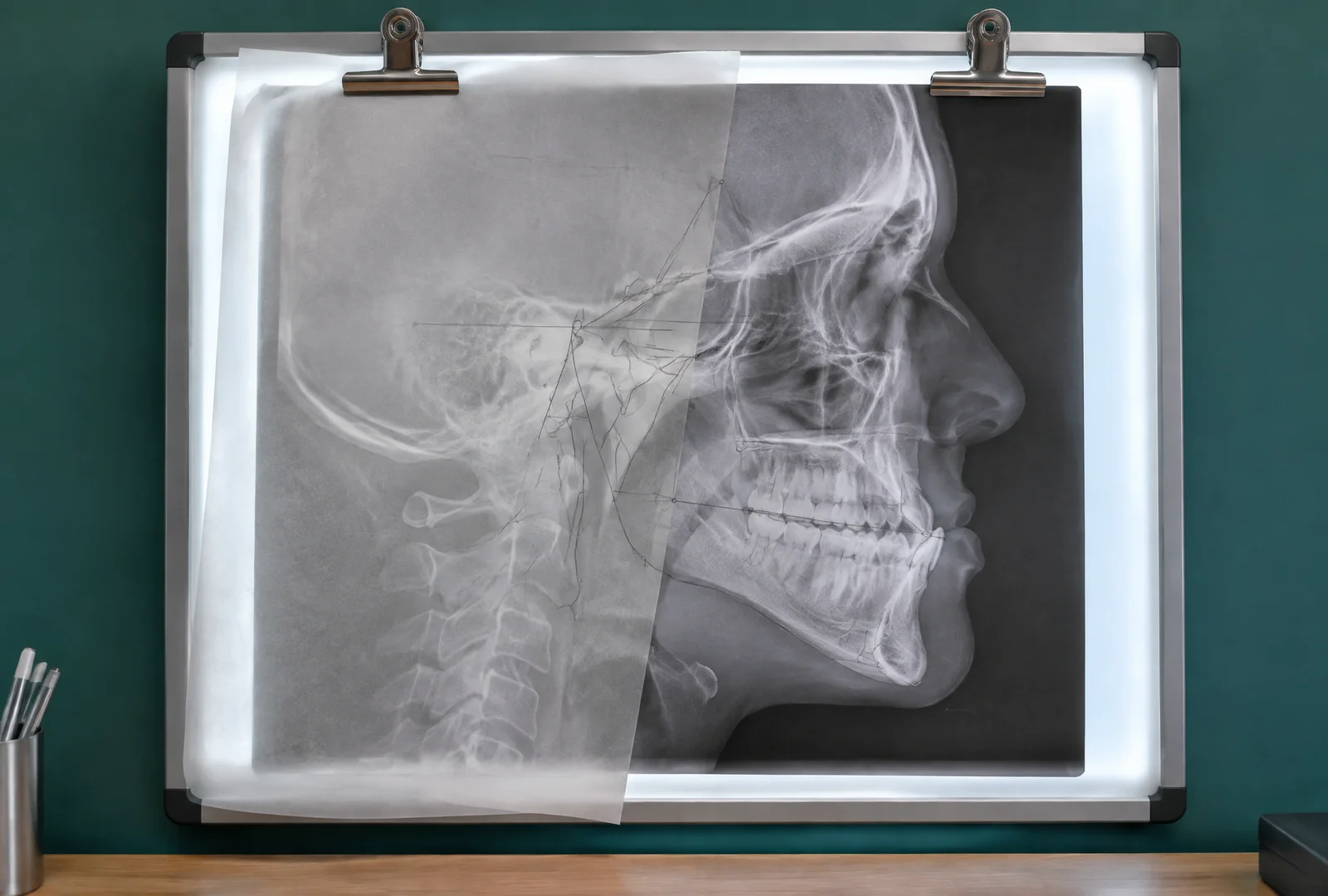
- Lateral cephalometric X-ray. A side view of the head on which I measure how the jaws sit relative to each other. It shows whether the problem is in the position of the jaw, in the teeth, or both.
- OPG X-ray. A panoramic image of all the teeth, both jaws.
- Dental models. An exact plaster copy of the teeth.
Only once I have all of that do I carry out the right analyses and measurements, and then I know whether the underbite is true or false, and which treatment options we actually have.
With a child, you don't wait
If you notice that when your child bites down the lower teeth sit in front of the upper ones, or the chin juts forward, don't wait for it to sort itself out. As the child grows, so does the problem.
I usually say the right time for a first check-up is around the age of seven, when the baby teeth start to change. A lower jaw in front of the upper one is the exception, and I wrote about it in the article on crooked teeth in children. When the problem is visible even to an untrained eye, come in straight away.
At the check-up I first establish whether the underbite is true or false, and based on that we start the right treatment straight away, so that it doesn't progress. With a child, time is on our side, but only until we spend it waiting.
Adults: braces straighten teeth, not faces
In adults the jaws have stopped growing, so what fixed braces can do has a clear limit.
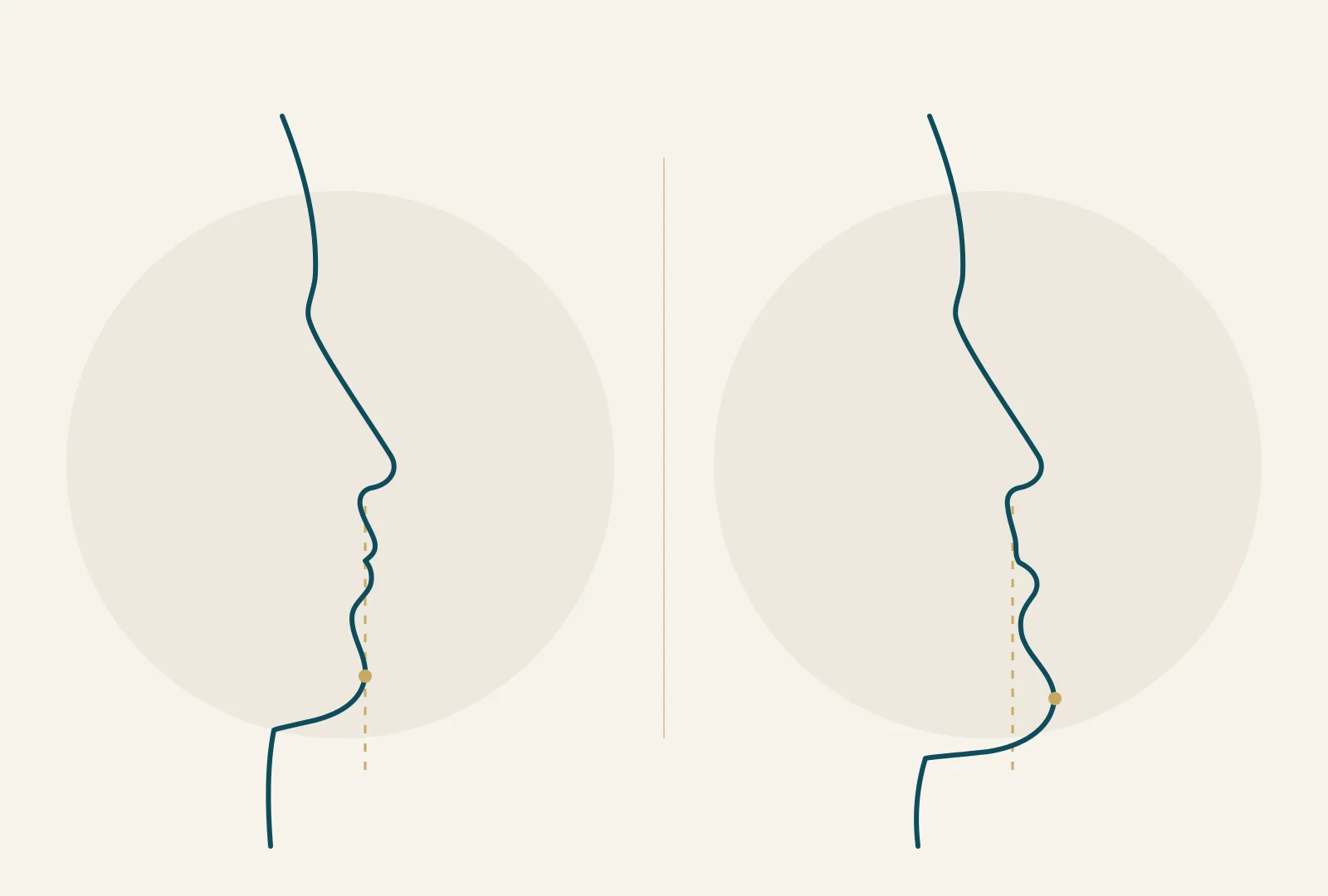
When a true underbite is treated with fixed braces alone, the teeth come into the right relationship. The lower front teeth, which used to sit in front of the upper ones, end up where they belong. But the relationship between the jaws stays the same. In an adult with a true underbite, fixed braces cannot change the look of the face, the profile, or how far the lower jaw and chin stick out. Only braces combined with jaw surgery can do that, but it is also a much bigger undertaking.
| Fixed braces alone | Braces and jaw surgery | |
|---|---|---|
| What changes | How the teeth meet | How the teeth and jaws meet, the profile, the chin |
| Anaesthesia | Not needed | General, for the surgery |
| Recovery | None | At least six weeks |
| Who treats it | Orthodontist | Orthodontist and maxillofacial surgeon |
Neither option is better in itself. If what matters to you is that your teeth bite together properly and your profile doesn't bother you, that goal can be reached without surgery. If it is the look of your face and chin that brings you in, braces alone won't change it.
What the path with surgery looks like
Treating an underbite with surgery is called combined orthodontic and surgical treatment, and in the literature you will also come across the term orthognathic surgery. It is done by a team: I lead the orthodontic part, and a maxillofacial surgeon does the operation.
It all starts with fixed braces and a special kind of treatment in which I prepare the teeth for surgery. Then comes the operation under general anaesthesia, and recovery takes at least six weeks. After the operation the fixed braces carry on with the job, and treatment is finished with them. In these cases patients often also wear elastics for the bite, which we call intermaxillary elastics.
How long the whole path takes depends on the diagnosis and the treatment plan, on how many phases it has, but also on you: how regularly you come to check-ups, how carefully you wear the elastics and how motivated you are. Because of its complexity and the different approaches involved, this treatment takes longer than standard treatment with fixed braces.
I trained specifically for this kind of treatment. My second specialisation, at the Military Medical Academy in Belgrade, was in exactly this: combined surgical and orthodontic treatment of facial and jaw deformities. That is why I lead the orthodontic part of such a case from start to finish, from the first check-up to the day the braces come off. You can read more about my training on the about me page.
From what age is jaw surgery possible?
This question keeps coming up on forums: can surgery be done earlier, while a child is still growing? It can't. Surgery is considered only once growth and development are completely finished, and that is checked with specific X-rays. Girls stop growing a little earlier than boys, but before the age of 18 surgery is not an option.
That doesn't mean sitting and doing nothing until then. Children and teenagers are helped with whatever makes sense at their age, and surgery is discussed when the time for it comes.
The decision is yours
I never tell anyone that they need surgery. I tell them what the real diagnosis is, what the treatment options are, and what they gain and lose with each one. The decision is the patient's, and I guide them through whichever option they choose.
If your lower jaw, or your child's, sits in front of the upper one, the first step is not a decision about surgery but a diagnosis. You can book a consultation online at my practice in Novi Sad.
Got a question about this topic?
Book a specialist consultation or write to me, I reply the same day.